
Millet Noodles for Everyday Kids Meals
Made from samai and kambu, these noodles cook in about eight minutes. Learn how to portion them for school-day dinners and pair them with simple podi or a quick vegetable thokku.
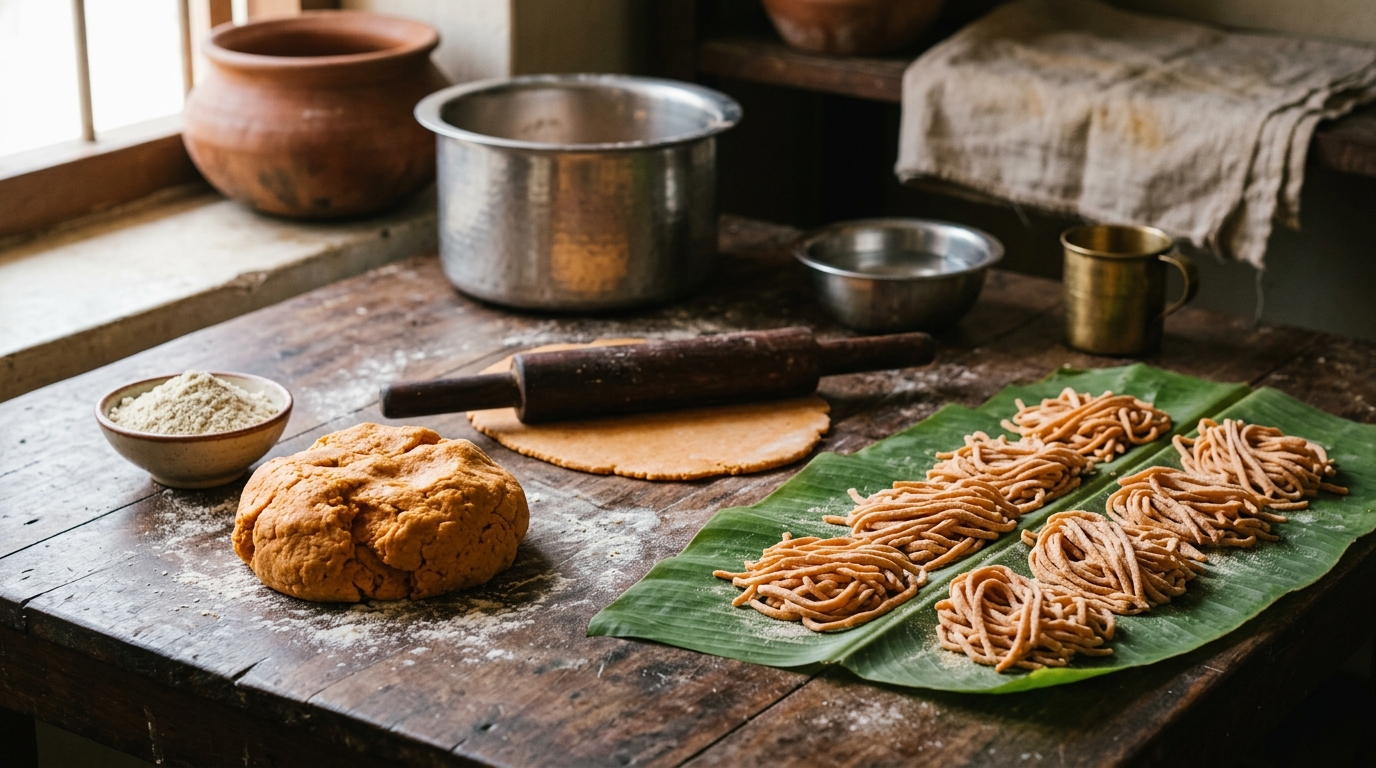
Millet noodles that kids will actually eat
Millet noodles are made from milled millet flour instead of refined wheat maida. At Aaruvita we mill the millet in small batches, so the noodles you buy come from grain we have handled ourselves. They cook in about five to seven minutes, hold their shape in the pan, and take masala and vegetables the same way regular noodles do. For a school-morning breakfast or a 4 pm snack, that matters more than anything else.
Children have a simple test for food: it has to taste like something they want to finish. Millet noodles pass that test when you cook them right. The grain gives them a firmer bite than maida noodles, and they do not turn to paste if you leave them a minute too long. Below is what goes into them, how to cook them fast, and how to keep the same bowl interesting through the week.
What is in the packet
Our millet noodles are made from millet flour with a small amount of binding flour to hold the strands together during drying. We use ragi, kambu and samai in different variants, so you can pick the grain your family already eels comfortable with.
- Ragi noodles — darker in colour, earthy taste, pairs well with tomato and garlic.
- Kambu noodles — mild, works with plain podi and ghee for younger children.
- Samai noodles — lighter, cooks quickest, good for a fast tiffin.
No added colour. No maida-only base. The masala sachet, where included, is our own blend — you can also skip it and use your home podi or a spoon of thokku instead.
Reading the cooking time
Millet noodles need slightly less water than wheat noodles and a shorter boil. Over-boiling is the main reason a batch goes soft, so set a timer the first two or three times until you know your stove. Drain and rinse under cool water if you are making a dry, tossed bowl. For a soupy kanji-style bowl, keep the starchy water and season it.
Three ways to serve them through the week
The same packet does not have to become the same dish. Here is how families in Coimbatore who buy from us tend to rotate it.
Plain ghee and podi
Boil, drain, toss with a spoon of ghee and a light dusting of idli podi or paruppu podi. This is the version most under-sixes finish without a fuss. Add roasted groundnut on top if your child likes the crunch.
Vegetable toss
Carrot, beans, capsicum and onion, cut fine and cooked fast on high heat. Add the boiled noodles, a little salt, and your masala sachet or a small spoon of thokku. Squeeze lime at the end. This is the closest to the roadside noodles kids ask for, made at home with millet.
Egg or paneer bowl
Scramble an egg or crumble paneer into the pan before the noodles go in. It turns a snack into something that holds a child till the next meal. Good for the evening after games or tuition.
Keep a small container of pre-cut vegetables in the fridge and the whole dish is done in under fifteen minutes on a working morning.
Storing, buying and what to check
Store the packet in a dry, airtight container once opened. Millet flour picks up moisture faster than maida, so a tight lid keeps the strands from going brittle or clumping. Keep it away from the stove-top steam.
- Buy the grain variant your family already eats — start with kambu or samai if you are new to millet.
- Check the cook time on the packet; it differs slightly between the three.
- Buy one packet first, cook it two or three ways, then decide the quantity for the month.
We sell the millet noodles at our Coimbatore shop and pack them fresh for orders. If you are stocking a month's tiffin, tell us and we will set aside the variants you want rather than have you come back for a second trip. You can place your order by phone or at the counter, and we will have it ready.
Next step: pick one variant, cook it plain with ghee and podi the first time, and watch which grain your child goes back for. That one becomes your regular, and the toss and egg versions build on it. Message us with the grain and quantity, and we will pack it for pickup or send it out with your next order.
Questions
- What are millet noodles made from?
- Millet noodles are made from milled millet flour instead of refined wheat maida, with a small amount of binding flour to hold the strands during drying. Aaruvita mills the grain in small batches.
- How long do millet noodles take to cook?
- Millet noodles cook in about five to seven minutes, needing slightly less water than wheat noodles. Over-boiling is the main reason a batch goes soft, so set a timer until you know your stove.
- Which millet noodle variant is best for young children?
- Kambu noodles suit younger children because the taste is mild and works with plain podi and ghee. Samai is lighter and cooks quickest, good for a fast tiffin, while ragi has an earthier taste.
- How do I keep millet noodles interesting through the week?
- Rotate the same packet through three versions: plain ghee and podi, a vegetable toss with masala or thokku and lime, and an egg or paneer bowl for after games or tuition.
- How should I store an opened packet of millet noodles?
- Store the packet in a dry, airtight container once opened. Millet flour picks up moisture faster than maida, so a tight lid keeps the strands from going brittle or clumping. Keep it away from stove-top steam.
- Where can I buy millet noodles in Coimbatore?
- Aaruvita sells millet noodles at their Coimbatore shop and packs them fresh for orders. For a month's tiffin, tell them the variants you want and they will set them aside for pickup or delivery.